
Iconic Slot Heroes That Still Pull Players In

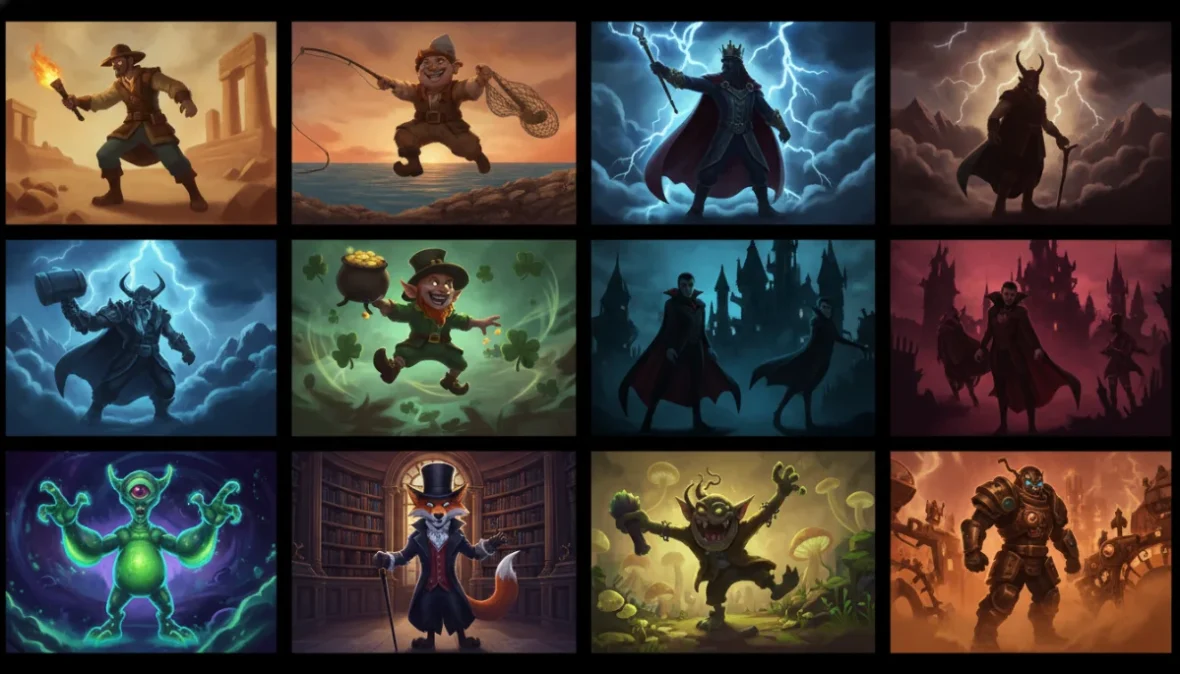
Some slot games fade fast, while others build identities that players remember for years. In many cases, the difference is a character with enough personality to carry a theme, support a feature set, and give a game a recognisable face. The most successful figures in online casino gaming do far more than decorate the reels: they shape brand loyalty, help sequels feel connected, and turn mechanics into something players can immediately understand.
That is why certain names keep showing up whenever people talk about modern slots. Whether the character is a treasure hunter, a mythological god, a cheeky mascot, or a monster from another galaxy, the best-designed ones make the game feel bigger than the spin itself. They create expectation, signal bonuses, and give studios a repeatable identity that can stretch across an entire franchise.
Why these characters became player favourites
The strongest slot characters usually succeed for the same reason: they are not passive artwork. They are tied directly to the game’s structure, so the player learns the rules through personality as much as through symbols and paytables. A fisherman collecting fish, a god launching multipliers, or an alien creature transforming into a massive Wild all communicate gameplay in a way that feels natural and memorable.
These designs also make sequels easier to launch. Once a studio has built recognition around a hero or mascot, it can reuse that identity in new titles without starting from zero. That is one reason franchises such as Book of Dead, Big Bass Bonanza, Thunderstruck, and Immortal Romance have lasted so well. Players are not just returning for a mechanic; they are returning for a familiar cast.
The ten characters that stand out
Rich Wilde remains one of the most enduring adventure figures in online slots because he channels the classic tomb-raiding energy players already understand from film and pop culture. Play’n GO used him to give Book of Dead a clear identity, and the character later expanded into a larger universe that includes Cat Wilde, which gave the franchise a stronger sense of continuity.
The Fisherman is the kind of mascot that works because he is both funny and functional. In Pragmatic Play’s Big Bass Bonanza series, he is closely tied to the cash-collection style of the free spins rounds, so his appearance is not just decorative. His presence tells the player that value is about to be gathered, which makes the feature feel easy to follow even when the action becomes busy.
Zeus has become one of the most visible mythological figures in iGaming because he brings instant authority to a reel set. In Gates of Olympus, the god stands off to the side and sends down multipliers that can range from 2x to 500x, giving the game both spectacle and tension. The character works because he is both familiar and dramatic, and that combination is difficult to ignore.
Finn, from NetEnt’s Finn and the Swirly Spin, takes a lighter approach. He is a cheerful leprechaun, but his role still matters because he helps frame the unusual spiral layout of the game. Instead of traditional spins feeling mechanical, the movement becomes part of the story, and Finn’s reactions make the whole grid feel more alive.
Mr. Foxin brings a polished, almost theatrical style to NextGen Gaming’s Foxin’ Wins series. As an aristocratic fox in a refined setting, he gives the franchise a strong visual signature, and the fox pups that convert symbols into Wilds add a playful layer to the mechanics. That mix of elegance and trickery is what helps the character stick in memory.
Hugo the Troll benefits from nostalgia in a way very few slot characters can match. Borrowed from a well-known 1990s interactive television property, he moved into online slots with titles such as Hugo 2 and Hugo Carts. For players who knew the original, the appeal is both emotional and mechanical, because the character links childhood memory with modern bonus play.
Gargoon is one of the best examples of a character that exists to explain the game’s system. In Play’n GO’s Reactoonz series, the alien creature sits beside the grid while players charge the Quantumeter. Once filled, Gargoon lands on the board as a large 3×3 Wild, which turns a strange sci-fi mascot into a direct part of the win structure.
Thor helped make Norse mythology a dependable slot theme long before it became as common as it is today. Microgaming, now Games Global, used him in Thunderstruck and later Thunderstruck II, where the god of thunder gave the game a sense of scale and power. His long-running popularity shows how a strong mythological figure can anchor an entire series.
Sarah and Michael carry Immortal Romance with a more story-driven approach than most slot pairs. Alongside characters such as Troy and Amber, they help structure the game’s Chamber of Spins feature, where different character paths unlock different bonus moods. That layered design gives the game a novel-like quality that is rare in the genre.
The Outlaws from Relax Gaming’s Money Train series work almost like a team of modifiers rather than a single mascot. Characters such as The Collector, The Payer, The Sniper, and The Necromancer each influence the bonus round in their own way, which makes the action feel collaborative and unpredictable. Their steampunk, post-apocalyptic Western style also gives the franchise a distinct visual edge.
What makes a slot character worth remembering
The most effective characters do not just look appealing; they help players understand the game before they have even learned the finer details. A good slot hero introduces the mood, hints at the bonus system, and makes repeated play feel like part of a larger journey. When a character has clear visual identity and a mechanical role, the game becomes easier to recognise and harder to confuse with competitors.
That is especially important in a crowded market where many games share similar structures. Studios such as Play’n GO, Pragmatic Play, NetEnt, Microgaming, and Relax Gaming use characters to give their products personality, but the most durable ones go a step further. They become shorthand for a whole style of play, which is why players can often name the character before they can remember the title of the game.
How these characters shape the wider market
Character-led design has changed the way slot franchises are built. Instead of launching a one-off game and hoping for short-term attention, developers can create a character that supports sequels, spin-offs, and thematic variations. That approach makes business sense, but it also benefits players, because it gives them a familiar entry point into new releases.
It also encourages stronger storytelling. A game like Immortal Romance can lean into mood and relationship drama, while Reactoonz can turn a strange alien into a machine for anticipation. Even a simple concept like fishing becomes more engaging when a visible character connects the feature to the action. In each case, the character is doing more than standing beside the reels; it is translating design into a personality the player can quickly grasp.
Questions players often ask
What makes a slot character iconic? A character becomes iconic when design and mechanics work together. If the figure helps trigger features, explain bonuses, or guide the theme, players are more likely to remember it.
Which studio has produced the most memorable characters? Play’n GO has built several strong franchises with figures like Rich Wilde, Hugo the Troll, and Gargoon, while Pragmatic Play has created huge visibility with Zeus and The Fisherman. Microgaming also deserves credit for early genre-defining names such as Thor.
Do character-driven slots change the odds? The character itself does not alter the underlying math of the game. It can signal features such as Wilds, free spins, or multipliers, but it does not change the RTP or the base probability structure.
Can these games usually be tried for free? Most of them can be played in demo mode through online casinos that support free play. That gives players a chance to understand the feature set before playing with real stakes.
Why do developers keep returning to character franchises? Because recognisable characters help with retention, sequel planning, and brand identity. A strong mascot can make a new release feel familiar before the first spin even lands.
